





Penta
ID # 13682349
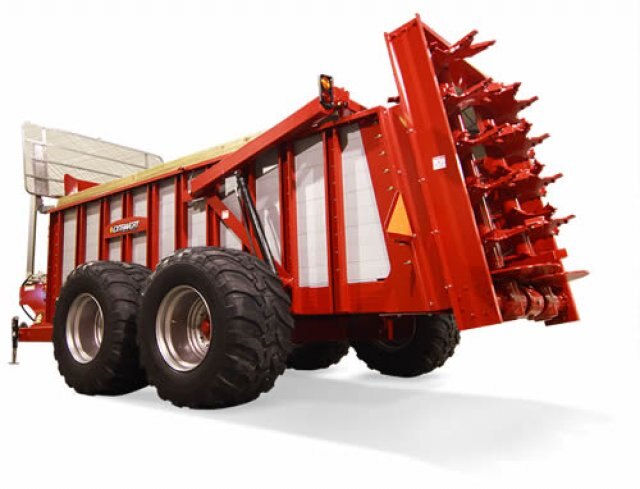
Penta V Series 8610

Call for Price


Overview
Specifications
Videos

|
V Series 8610
|

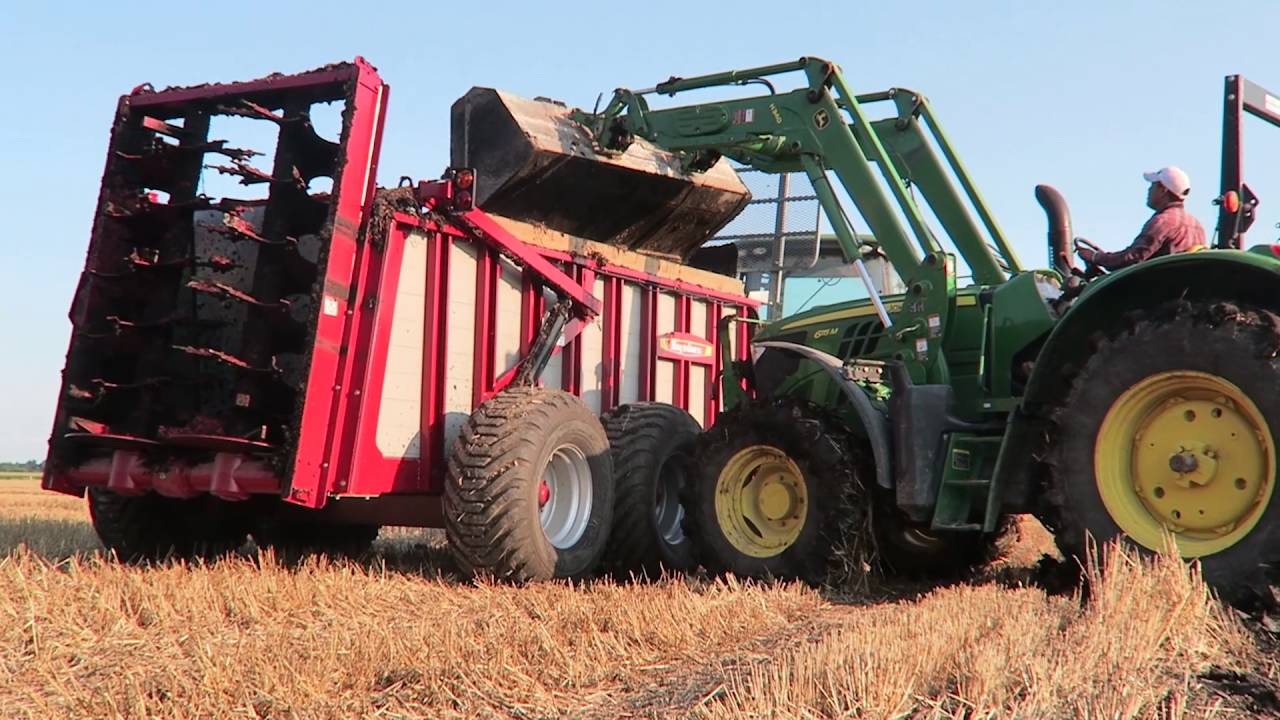
V Series Vertical Beater Models The new industry leader that delivers performance and control to maximize the nutrient value of your manure. |
|
Features: Vertical Beaters |

For Vertical Beaters we went to BERMA, a world leader in vertical beater design. To ensure optimum performance, our engineering team worked with BERMA engineers to "beef up" their basic beater designs to better suit harsh North American conditions. Paddle configurations are a combination of blades to slice through tough materials and cups to fling finer materials and semi-solids. Even corn and bean stalks are shredded to an indistinguishable fineness. Beaters can be customized with any combination of cups and knives. For even more durability in high-usage applications or abrasive materials we offer forged and hardened components. We've even created custom components for specific applications. What can we do for you? |

Better processing and distribution means better feed for your fields. Closely-spaced spirals and over-lapping beater tips mean more contact with the manure for finer processing and better distribution. Unlike apron-type spreaders, which have a dead spot for apron clearance, spirals on a Hagedorn spreader go all the way to the bottom of the beater. An impeller, at the bottom of each beater, further ensures good distribution of fine materials and semi-solids. |
|
Features: Hydraulic Systems |

Flow Control Hagedorn manure spreaders use a custom designed flow control valve for precise control of unloading and application. Engineered and manufactured exclusively for Hagedorn, the valve works well with all types of hydraulic systems and includes an internal bypass for quick return regardless of unloading speed. All 5000 series and 8000 series V Series are standard-equipped with a sequencing valve. This feature is integrated into the flow-control valve and prevents the push-gate from engaging before the endgate is raised, preventing accidental damage due to a collision. The sequencing valve is available as an option on horizontal beater models. Flow controls are designed by our own engineering staff to work with all modern hydraulic systems and are manufactured by a reputable North American manufacturer. |

Hoses & Fittings All hoses and fittings are industry standard SAE (O-ring) or JIC (37 degree flare) fittings. There are no pipe threads. All hoses and fittings are rated for 3500 PSI operation. Machines are supplied with poppet style ISO male tips from reputable North American suppliers such as Parker and Safeway. Rubber hoses eliminate the corrosion problems that can destroy steel lines and, in the event of damage, can be easily replaced without ordering special parts. |
|
Cylinders Push-off cylinders, like our flow controls, are designed by our own engineering staff and manufactured by a reputable North American manufacturer. Our hollow-rod design (an industry first in 1990) allows oil flow for extend and retract cycles to be channelled through the rod eliminating the tangle of hoses that would otherwise be involved when the cylinder strokes. The cylinders use a rugged, ball-type sealing system that easily handles the flexing that is inevitable with stroke lengths up to 17 feet. Pistons and glands are high-grade ductile iron for maximum wear and durability. For V Series 5000 series models we use industry standard tie-rod cylinders on the endgate. V Series model 8610 uses welded-construction endgate cylinders. |
|
Features: Powertrain |

Powertrain Our drivetrain is designed to be easy to maintain and service. In the 1970s, Hagedorn pioneered the use of splined shafts for high-horsepower snow blowers. Today, every shaft connection on a Hagedorn spreader is a splined connection. Splines transmit power efficiently by spreading loads to the entire shaft (unlike keyed drives that focus the load on a single stress point). Splines can be quickly and easily assembled and disassembled. |
|
|
|
Over-running Clutch V Series Models Heavy beaters rotating at high speed pack a lot of inertia and can cause a lot of damage if brought to a sudden stop. To protect your tractor and the drivetrain of your spreader we have equipped every V Series with an over-running clutch which allows the beaters to coast to a stop without undue stress. |
|
Gearboxes
|
|
|
|
Bearing Housings
|
 |

 Bearings

|
Features: Frame Construction |

The frame is the heart and backbone of a manure spreader. Our frames combine structural tubes, formed sections and structural channels to achieve great strength and maintain the flexibility that is required in a large mobile platform. Manure unloads and spreads more evenly when the load is packed. Hagedorn platforms use large-profile formed sections, closely spaced, to carry heavy loads and withstand the forces of packing. |

Our customers told us they wanted a spreader that is strong enough to use as a push-off trailer without worrying about sidewall strength. Our frames are designed to support the sides without bulky horizontal members and without relying on the beaters to tie things together. Our hitch configurations, axle designs and weight distribution are the best in the industry. Axle frames are bolted, not welded, to the main frame. It's good construction and, in the event of damage, the axle is easily removed for repair. |
 |
 |

Galvanized Components Hot-dip galvanized steel has been effectively used since the mid 1800's to prolong the life of building and machine components. Hydra-Spread uses galvanizing to protect the end-gate, push-gate and beater pan of selected models. Immersing the welded assembly in molten zinc ensures total protection. Because the process takes place at 700 degrees F the zinc is literally welded to the steel. Inside surfaces of structural tubes, seams, overlapped components—all are completely covered by a protective layer of zinc. All of this protection comes at a small price. Because the metal is heated to 700 degrees F there is some, unavoidable, shape distortion in the sheet metal components—a small price for years of extra component life. |
|
Poly Boards
|
 |
 |
 |

|
Features: Axles & Tires |

Soil Compaction A typical healthy soil consists of approximately 50% soil particles (sand, silt, clay) with the remaining 50% taken up with air and water. Compaction limits the soil's ability to store, and restricts the movement of, air and water. This results in poor seedling vigour, poor plant growth and, ultimately, reduced yields. There are many causes for soil compaction - some natural, some caused by cultural practices. We will focus on vehicle-induced compaction. Vehicle induced compaction can be divided into two types – shallow and deep. |

Shallow Compaction Shallow Compaction is defined as compaction within the normal tillage zone (5" to 10") and is related to pressure applied to the surface of the soil. Higher ground pressures cause increased shallow compaction. It should be noted that ground pressure is approximately equal to tire inflation pressure. Operators can minimize shallow compaction by using low-pressure flotation-type tires with a large footprint. Hydra-Spread offers low-pressure flotation-type tires for all models.
Deep Compaction
Deep Compaction is defined as compaction that occurs below the normal tillage zone and is generally related to total axle load. Deep compaction is not mitigated by tire size or inflation pressure unless ground pressure (tire inflation pressure) is reduced to 12 psi or lower. Deep compaction can be reduced or avoided by sharing the total load across more than one axle. Photo of tire soil compaction Soil compaction is a complex subject. There are many excellent websites. (Just search for "soil compaction") Please contact Hagedorn for detailed information about how to minimize soil compaction and make your Hagedorn spreader easier to tow by using low-pressure flotation-type tires. |
Model
V Series 8610
Category Name
Agriculture
Year
2017
Sale Type
New
Manufacturer
Penta
Cubic Feet Struck Level
594 (ASAE S324.1)
Heaped Bushels
740 (ASAE S237.1)
Inside Width
79
Inside Depth
60.1
Inside Length
18 (ASAE S324.1)
Overall Length
32
Axle Type
Oscillating Tandem
End Gate
Standard
Wood Rails
Standard
Available PTO
1000 RPM / 1 3/4-20
Wheel Hub Type
10 Bolt
Wheel Hub Capacity
20,000 Lbs
Videos
Model
V Series 8610
Category Name
Agriculture
Year
2017
Sale Type
New
Manufacturer
Penta
Quantity
0
Cubic Feet Struck Level
594 (ASAE S324.1)
Heaped Bushels
740 (ASAE S237.1)
Inside Width
79






Copyright© 2026 Dealer Performance Demo - Powered by Turn Key Web Solutions - Privacy Policy - All Items - Dealer Performance Login