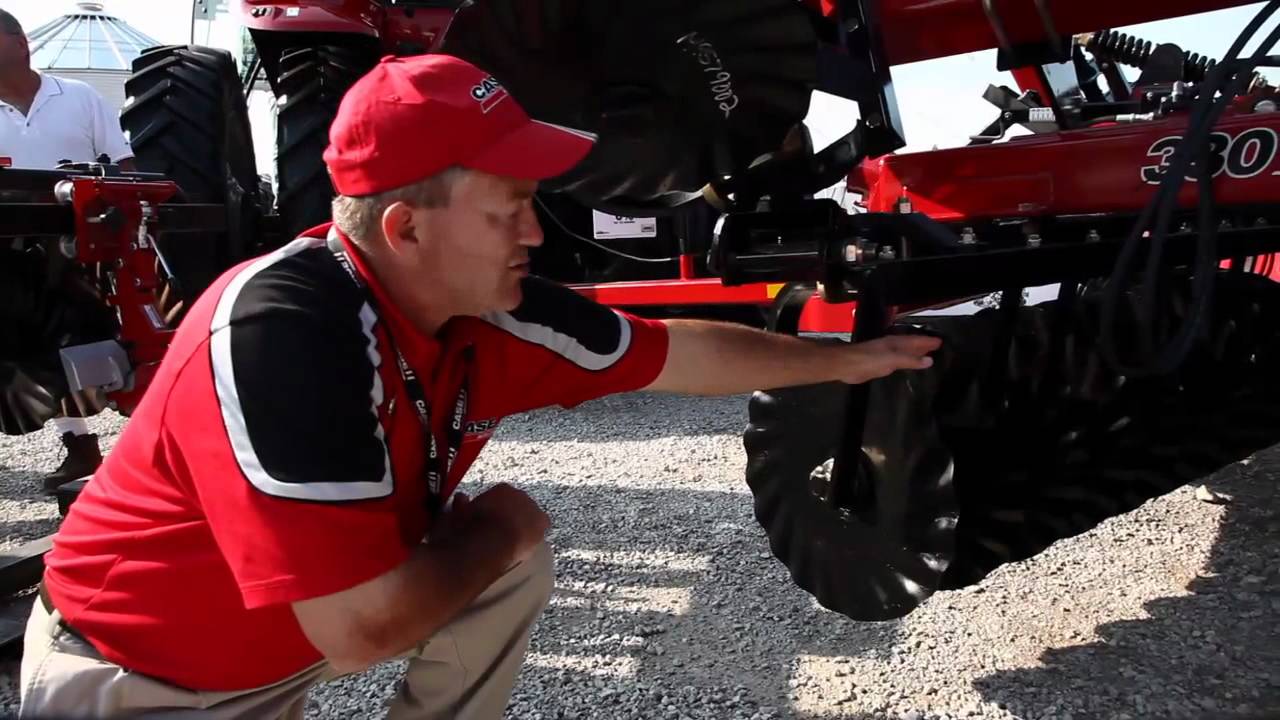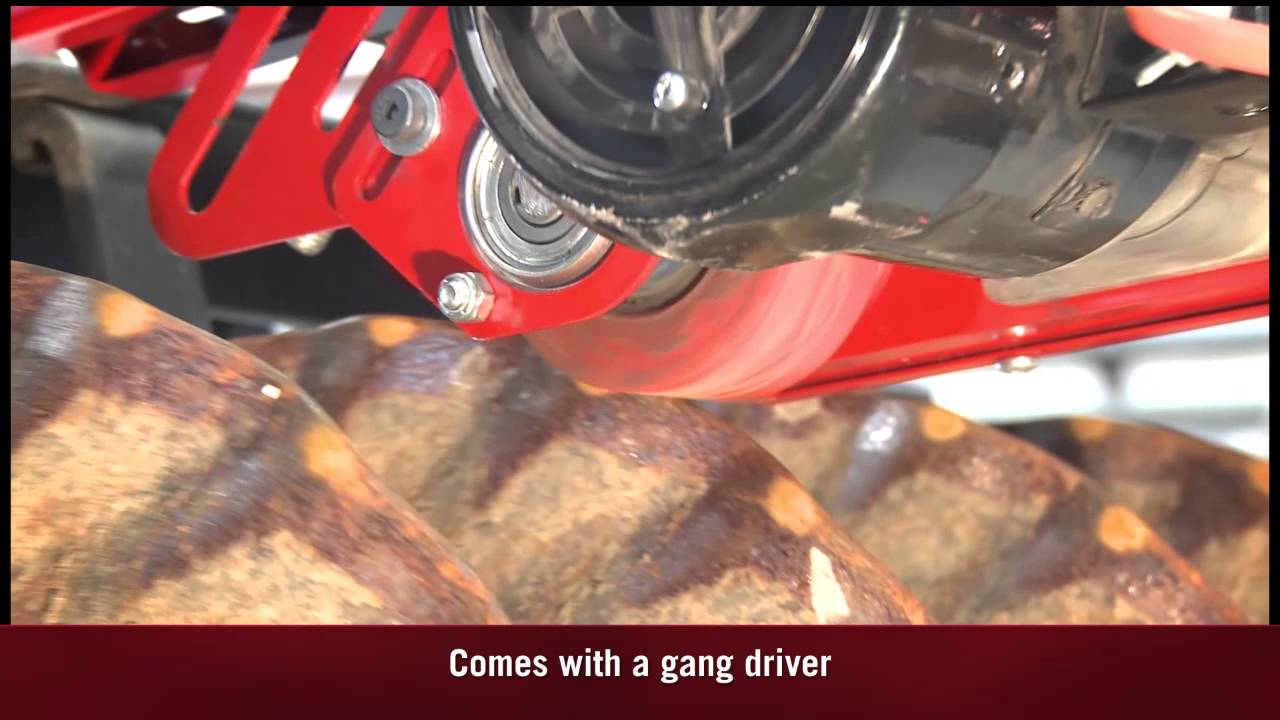


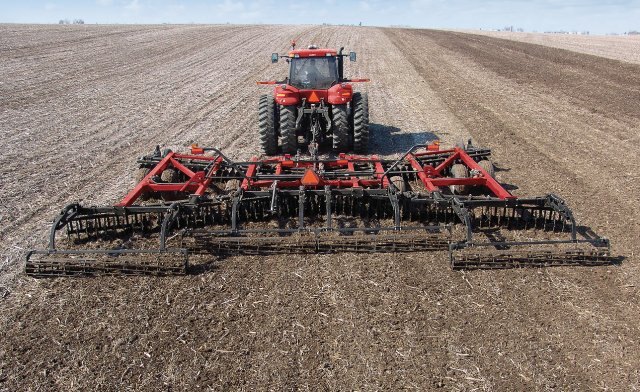

TILL AND PREP. SPRING OR FALL. Till up the remains of your most recent crop, and prep the soil terrain for your next one, with the Case IH True-Tandem™ 330 Turbo. It’s a fast and efficient way to cover a lot of acres, manage residue and level the soil in either the spring or fall. |
|
Available Models |
| True-Tandem 330 Turbo |
22 ft. 2 in. (6.8 m) |
68 |
7.5 (191) |
| True-Tandem 330 Turbo |
24 ft. 7 in. (7.5 m) |
84 |
7.5 (191) |
| True-Tandem 330 Turbo |
31 ft. 8 in. (9.7 m) |
100 |
7.5 (191) |
| True-Tandem 330 Turbo |
34 ft. 8 in. (10.6 m) |
114 |
7.5 (191) |
| True-Tandem 330 Turbo |
42 ft. 5 in. (12.9 m) |
142 |
7.5 (191) |
| True-Tandem 330 Turbo |
47 ft. 2 in. (14.4 m) |
158 |
7.5 (191) | |
|
Features |
TAKE OUT WEEDS, SHALLOW COMPACTION AND SOIL CRUST WHILE ALSO LEVELING
THE SOIL
The Case IH True-Tandem 330 Turbo levels soil in faster, shallower passes than other tillage operation. It allows you to get through the field faster in the spring and capture higher yield potential. |
Improved verticle Tillage - Exclusive, patented, shallow-con cavity turbo blade design
- Vertical tillage with the added ability to level
- Blades move soil and residue laterally as well as up and down
- Breaks the crust and aerates the soil
- Providesuniform seedbed depth and temperature, contributing to early, even plant emergence in the spring
- Allows for precise depth adjustment and greater control over soil residue cover at planting to fit a wide range of soil types, topographies and management objectives
- Does not leave coulter slots that can dry out
- Gang blades work at uniform depth in hard wheel tracks or out of tracks
|
Manages Residue in Fall and/or spring - Controls the size of the residue
- Breaks up corn root balls
- Puts sized residue in contact with the soil to:
- Promote breakdown of residue
- Anchor residue
- Reduce hairpinning
|
Vertical Tillage Plus Leveling Capacity

Moves soil up, over, out - Patented blades move soil and reside up, down and laterally to slice, size, mix and level fields
- Unique shallow-concavity blades with turbo vanes
- Exclusive construction for higher field speeds, greater fuel efficiency, and long service life
|
Manage cropresidue - Prep the seedbed
 - Speed of vertical tillage with added leveling ability
- Effectively sizes tought Bt corn stalks
- Breaks up corn root balls and integrates into soil to promote breakdown
- Removes soil crusts and shallow compaction
- Uproots young weed seedlings
- Single-point depth control allows for precise, high-speed performace in a wide range
- Superior seedbed leveling with optimal weight distribution, hydraulic leveler adjustment and walking tandems
- Optional Advanced Conditioning System, for extra seed bed leveling ahead of planting
|
Productivity Features - All 330 Turbo models run 7–9 mph (11–15 kph)
- Delivers a low 5–7 PTO hp-per-foot (4–5 kW per-1/3 m) requirement for greater efficiency
- The42-ft. model features true five-section design
- Follows ground contours better and transports narrower than competitors' machines
- Can cover 1,000 acres in 24 hours at 90% field efficiency
- The only vertical-tillage tool in the marketplace capable of leveling the soil with this kind of productivity
|
Rugged construction - Proven welded-frame design
- Heavy-duty spring-cushion gangs
- Frame-mounted rolling harrow
- Pivoting stabilizer wheels
- Adequate weight to hook on and go no additional weight needed for performance in even the toughest conditions
- The 42-ft. model has heavier-duty walking tandems throughout; 16.5x16.1 FI (E) on the center-section mainframe
- The adjustable castering gauge wheel on the outer wings hugs ground contours and helps maintain a uniform cutting depth, even in rough terrain (42-ft. model)
- Includes a bearing shield to ensure productivity in rocky and muddy conditions (42-ft. model)
|
Fuel Efficient
Vertical-tillage practices, combined with the patented Case IH shallow-concavity turbo blade, result in higher groundspeed and make True-Tandem 330 Turbo more fuel efficient than other tillage practices. - Source: Study conducted by Colorado State University Extension Service
|